1. Introduction
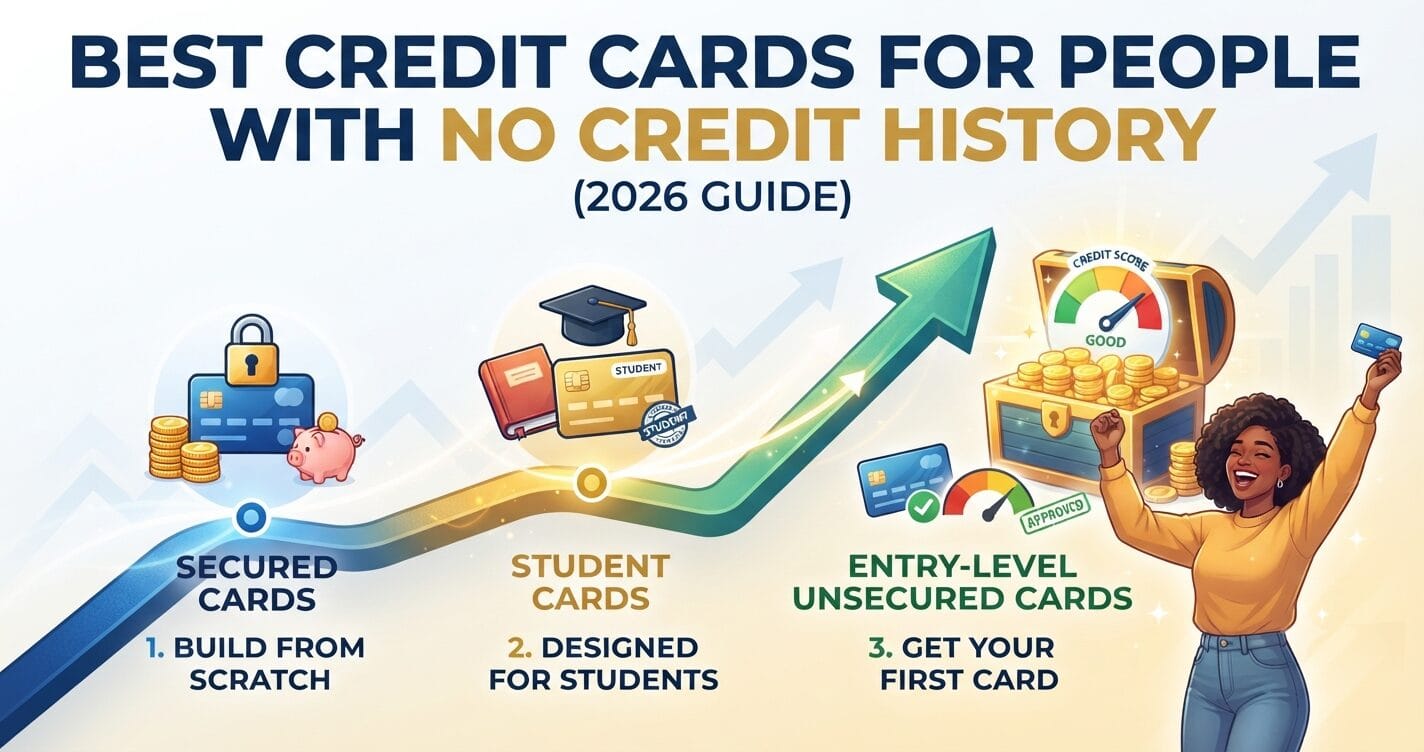
Trying to get your first credit card can feel like a strange catch twenty two. Card issuers want to see a track record of responsible borrowing before approving you, but you cannot build that track record without first being approved for a card. If you have ever felt stuck in that loop, you are far from alone.
Whether you are a recent graduate, new to the country, or simply someone who has always paid with cash or debit, having no credit history does not mean you are out of options. Several credit cards are specifically designed for people in exactly this situation, and choosing the right one can be the first step toward building a strong credit foundation.
A good starter credit card does more than just let you make purchases. Used responsibly, it helps you build a credit score that will eventually affect your ability to rent an apartment, get approved for a car loan, qualify for a mortgage, and even land certain jobs.
In this guide, we will cover why building credit matters, what to look for in a first credit card, a step-by-step guide to getting approved and using it wisely, a real-life story, common mistakes to avoid, and a simple action plan you can start today.
2. Problem or Situation
Credit card issuers rely heavily on your credit history to decide whether to approve you and what interest rate or credit limit to offer. Without any history, there is no data showing whether you pay bills on time, so many traditional credit cards will deny your application outright.
This creates real frustration for people just starting out financially. Without a credit card, it becomes harder to build a credit score, and without a credit score, many other financial milestones, like renting an apartment or financing a car, become more difficult or more expensive due to higher interest rates or required co-signers.
Some people in this situation resort to no-credit-check loans or other alternative financing options that often come with extremely high fees or interest rates, which can create financial strain rather than solving the underlying problem.
3. Solution
The solution is applying for a credit card specifically designed for people with no credit history. These typically fall into two categories: (1) secured credit cards, which require a refundable security deposit that usually becomes your credit limit, and (2) student or starter credit cards, which are designed with more lenient approval criteria for people just beginning their credit journey.
Both options report your payment activity to the major credit bureaus, which means responsible use, like paying on time and keeping your balance low, directly helps build your credit score over time. After several months or a year of consistent, positive payment history, many people qualify to upgrade to a traditional unsecured card with better rewards and terms.
The key is choosing a card with no or low annual fees, reporting to all three major credit bureaus, and, if it is secured, a clear path to getting your deposit back or upgrading to an unsecured card later.
4. Step-By-Step Guide
4.1. Step 1: Understand your two main starter options.
Research secured credit cards, which require a security deposit, and student or starter unsecured cards, which typically do not, to decide which fits your situation.
4.2. Step 2: Compare fees and reporting practices.
Look for cards with no or low annual fees that report to all three major credit bureaus, since this ensures your positive payment history actually builds your credit profile everywhere it matters.
4.3. Step 3: Check the required security deposit if applicable.
For secured cards, confirm the minimum deposit amount and whether it becomes your credit limit dollar for dollar.
4.4. Step 4: Apply for the card that fits your situation.
Complete the application, providing accurate personal and income information as requested.
4.5. Step 5: Use the card for small, planned purchases.
Once approved, use the card for small purchases you would make anyway, such as gas or groceries, rather than treating it as extra spending money.
4.6. Step 6: Pay your balance in full every month.
Avoid carrying a balance whenever possible, since interest charges can add up quickly and carrying high balances can hurt your credit utilization ratio.
4.7. Step 7: Set up automatic minimum payments as a safety net.
Even if you plan to pay in full, setting up at least the minimum automatic payment protects you from accidentally missing a due date.
4.8. Step 8: Monitor your credit score progress.
Many card issuers offer free credit score tracking. Check in every few months to see how your responsible use is building your credit history.
4.9. Step 9: Consider upgrading after six to twelve months.
If you started with a secured card, ask your issuer about upgrading to an unsecured card once you have built a positive payment history, which often returns your security deposit.
5. Real-Life Story
Meet Sofia, a twenty-two-year-old who moved to the United States for graduate school. With no credit history in the country, Sofia was denied for several traditional credit cards before discovering secured credit cards designed for exactly her situation.
She opened a secured card with a two hundred dollar deposit, which became her credit limit. Sofia used the card only for her monthly phone bill and a small amount of groceries, always paying the full balance before the due date. She set a calendar reminder each month, just to be extra careful not to miss a payment during her busy semester.
After eight months of consistent, responsible use, Sofia checked her credit score for the first time and was surprised to see she already had a solid foundation. She contacted her card issuer, who confirmed she qualified to upgrade to an unsecured card. Her deposit was returned in full, and she now had an established credit history that helped her get approved for an apartment lease without needing a co-signer.
Sofia’s story shows that building credit from nothing does not require complicated strategies. It just requires the right starting card and consistent, responsible habits.
6. Common Mistakes To Avoid
6.1. Applying for too many cards at once.
Multiple applications in a short period can create several hard inquiries, which may temporarily lower your credit score.
6.2. Choosing a card with a high annual fee.
Many starter cards designed for building credit charge no annual fee, so there is rarely a reason to pay one when starting out.
6.3. Not checking if the card reports to all three credit bureaus.
Some cards only report to one or two bureaus, which can limit how quickly and broadly your credit history builds.
6.4. Carrying a high balance relative to your credit limit.
This increases your credit utilization ratio, which can hurt your score even if you eventually pay the balance off.
6.5. Missing payment due dates.
Payment history is the single biggest factor in most credit scoring models, so even one missed payment can set back your progress.
6.6. Closing the account too soon after building credit.
Closing your oldest account can shorten your average credit history length, which may lower your score even after you qualify for better cards.
6.7. Using the card for large, unplanned purchases.
Treating a starter credit card as extra spending money, rather than a tool for small, planned purchases, often leads to balances that are hard to pay off.
6.8. Ignoring your credit score progress entirely.
Not checking your score periodically means missing early warning signs or opportunities to upgrade to better credit products.
7. Pro Tips
7.1. Set up autopay for at least the minimum payment, then manually pay the full balance before the due date to avoid ever missing a payment by accident.
7.2. Keep your credit utilization below thirty percent of your limit, and ideally under ten percent, for the healthiest impact on your score.
7.3. Use your starter card for one or two recurring bills, like a streaming subscription or phone bill, to build consistent, predictable payment history.
7.4. Check your credit report periodically for errors, since inaccurate information can unfairly hold back your progress.
7.5. Avoid closing your first credit card once you qualify for better options, since keeping it open helps maintain your average account age.
7.6. Ask your issuer directly about upgrade paths after six months of on-time payments, since some will proactively offer this without you needing to reapply elsewhere.
7.7. Be patient. Building strong credit typically takes months to years of consistent habits, not a single lucky approval.
8. Did You Know?
Payment history typically makes up the largest single factor in most common credit scoring models, often around thirty five percent of your overall score. This means that simply paying your starter credit card on time, every time, does more to build strong credit than almost any other single habit you can develop.
9. Quick Action Plan
Today:
Research whether a secured or starter unsecured credit card fits your current situation best.
This Week:
Compare two or three no-annual-fee starter cards that report to all three major credit bureaus.
This Month:
Apply for your chosen card and set up autopay for at least the minimum payment as a safety net.
This Year:
Use the card consistently for small purchases, pay in full each month, and check in with your issuer about upgrading after six to twelve months of positive history.
10. Frequently Asked Questions
Q1: What is the easiest type of credit card to get with no credit history?
Answer: Secured credit cards are typically the easiest to get approved for with no credit history, since the required security deposit reduces the risk for the card issuer. Some student or starter unsecured cards are also accessible, particularly for those enrolled in college.
Q2: How long does it take to build credit with a starter card?
Answer: Many people see a measurable credit score after about six months of responsible use, though building a strong, well-established credit history typically takes one to two years or longer of consistent, positive habits.
Q3: Will I get my security deposit back on a secured credit card?
Answer: Yes, in most cases, as long as you close the account in good standing or upgrade to an unsecured card, your deposit is typically refunded in full.
Q4: Can I get a credit card with no credit history and no income?
Answer: It depends on the issuer. Some student cards and secured cards have more flexible income requirements, though most issuers still ask for some form of income information, which can include allowance, financial aid, or household income in certain cases.
11. Conclusion
Having no credit history does not mean you are stuck. Secured and starter credit cards exist specifically to help people in exactly your situation begin building a credit profile, one responsible payment at a time.
By choosing a card with no annual fee, using it for small planned purchases, and paying your balance in full every month, you can build a strong credit foundation that opens doors down the road, from apartment leases to car loans to better credit card offers in the future.
12. Thought For The Day
Every strong credit history starts with a single on-time payment. The habit matters more than the starting point.
— Victor Sterling
13. Call To Action
Ready to start building your credit from scratch? Compare secured and starter credit cards today, apply for the one that fits your situation, and set up autopay before your first statement even arrives.
14. Disclaimer
This article is for general informational and educational purposes only and does not constitute financial advice. Credit card terms, fees, and approval criteria vary by issuer and may change over time.
Please review current terms directly with each card issuer and consult a licensed financial advisor for guidance specific to your situation.
 Victor Sterling