AFFILIATE DISCLOSURE
MoneyWealthGuide.com may earn a commission when you click certain links and purchase or sign up for products or services recommended on this website. This doesn’t affect the price you pay and helps support the maintenance of this website.
By Victor Sterling | Last updated: October 21, 2026
Quick note: This article is general education, not financial advice. Credit card terms, fees, and approval rules vary by issuer and change often. Check the card’s official terms before you apply. Full disclaimer at the bottom.
If you’re trying to build credit, or fix it, you’ve probably seen two phrases over and over: secured credit card and unsecured credit card. They sound like technical jargon, but the difference is actually simple.
A secured card asks you to put down a cash deposit first. An unsecured card doesn’t.
That one difference changes a lot: who gets approved, how much you can spend, what perks you get, and how you move forward. Let’s break it down in plain English so you can pick the card that fits your situation.
What Is a Secured Credit Card?
A secured credit card requires a refundable security deposit when you open the account. That deposit acts as collateral, which is basically the card company’s safety net if you don’t pay.
In most cases, your deposit also sets your credit limit. Put down $200, and you usually get a $200 limit. Put down $500, you get $500. Some issuers let you raise your limit by adding to your deposit, and some will increase it on their own after a track record of on-time payments.
Otherwise, it works like any other credit card. You swipe it, you get a monthly bill, and you pay it. The big benefit is that, if the issuer reports your activity to the three major credit bureaus (Equifax, Experian, and TransUnion), your on-time payments can help build your credit history.
What Is an Unsecured Credit Card?
An unsecured card is what most people picture when they think “credit card.” There’s no deposit and no collateral. The card issuer decides whether to approve you and how big your limit is based on things like your credit history, income, and existing debt.
Because the issuer is taking more risk, approval standards are usually higher. In exchange, unsecured cards often come with perks like cash back, travel points, sign-up bonuses, and higher credit limits.
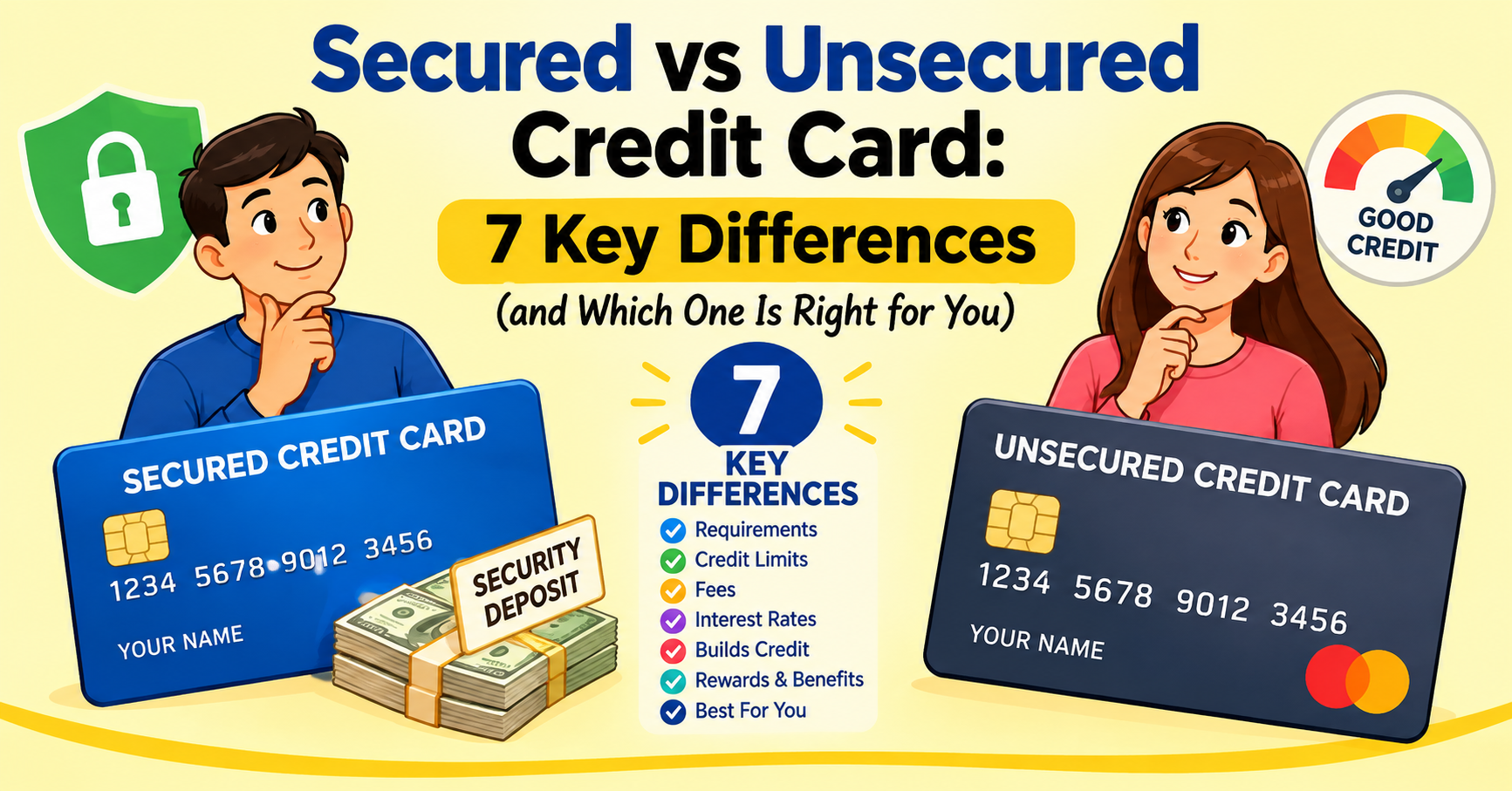
7 Key Differences Between Secured and Unsecured Credit Cards
1. The security deposit
This is the big one. Secured cards require a deposit upfront. Unsecured cards don’t. The deposit amount for secured cards varies by issuer. For example, one major issuer’s secured card has listed deposits from $200 up to $2,500. Check the current terms for any card you’re considering.
The good news: the deposit is generally refundable. You typically get it back if you close the account in good standing or if the issuer upgrades you to an unsecured card.
2. How your credit limit is set
With a secured card, your limit usually matches your deposit. With an unsecured card, the issuer sets your limit based on your credit profile. That means unsecured limits can be higher, but only if you qualify.
3. How easy it is to get approved
If you have no credit history, a thin file, or past credit problems, a secured card is often easier to get. Because the deposit lowers the issuer’s risk, they’re more willing to say yes. Unsecured cards generally want to see a stronger credit record.
4. Rewards and perks
Unsecured cards usually win here. Cash back, points, travel perks, and welcome bonuses are more common on unsecured cards. Secured cards are mostly built for credit-building and often have fewer perks, though a few do offer basic rewards.
5. Fees and interest rates
Both types can charge annual fees, late fees, and interest. Credit card interest rates are often in the 20% range or higher, no matter which type you choose, so the best habit is to pay your full statement balance each month. Some secured cards charge annual fees or have higher rates, so read the fee table before applying. Don’t pay a fee if there’s a similar card without one.
6. How you move up later
Many secured cards offer a path to graduate to an unsecured card after a period of responsible use, often around six to twelve months, though timelines vary. When that happens, you typically get your deposit back. Not every secured card has this option, so ask before you apply.
7. The risk to your money
With a secured card, you could lose your deposit if you don’t pay what you owe, since the issuer can use it to cover your balance. With an unsecured card, there’s no deposit at risk, but missed payments can still lead to fees, interest, collections, and damage to your credit.
Quick Comparison
1. Upfront deposit: Secured, yes (usually refundable). Unsecured, no.
2. Credit limit: Secured, usually equals your deposit. Unsecured, set by the issuer.
3. Approval: Secured, easier with limited or poor credit. Unsecured, usually needs fair-to-good credit.
4. Rewards and perks: Secured, fewer. Unsecured, more common.
5. Builds credit? Secured, yes, if it reports to all 3 bureaus. Unsecured, yes.
6. Can upgrade later? Secured, often, depending on the issuer. Unsecured, not applicable.
Do Secured Cards Really Build Credit?
Yes, as long as you use them the right way. A secured card that reports to Equifax, Experian, and TransUnion builds credit in the same way an unsecured card does. The credit bureaus generally don’t care whether the card was secured.
Two things matter most for your credit score, according to the FICO scoring model:
1. Payment history (about 35% of your score): Paying on time, every time.
2. Credit utilization (about 30%): How much of your limit you’re using. Experts often suggest staying below 30%, and lower is even better.
The other factors are the length of your credit history, the mix of credit types, and new credit applications.
Important: A prepaid card or a regular debit card does not build credit, because those don’t report to the credit bureaus like credit cards do. A secured card is different, because it’s a real credit card with a deposit behind it.
Who Should Get a Secured Card?
A secured card could be a good fit if:
1. You have no credit history (for example, you’re young or new to the U.S.).
2. You’re rebuilding after missed payments, collections, or other credit problems.
3. You’ve been denied for an unsecured card.
4. You want a built-in spending limit to help control overspending.
5. You can afford to set aside the deposit without hurting your budget.
Who Should Get an Unsecured Card?
An unsecured card could be the better choice if:
1. You have fair to good credit and expect to be approved.
2. You can’t spare a deposit right now.
3. You want rewards, perks, or a higher limit.
4. You’re comfortable paying your balance in full each month.
Some people also start with an “unsecured card for building credit” that targets people with limited history. Those cards don’t require a deposit, but they may charge more in fees or have lower limits. Compare the terms carefully.
6 Tips for Using Either Card to Build Credit
1. Pay on time, every time.
Set up autopay for at least the minimum so you never miss a due date. A payment that’s 30 or more days late can be reported to the credit bureaus and hurt your score.
2. Pay the full balance when you can.
You avoid interest, and your credit still benefits from regular on-time payments.
3. Keep your balance low.
Aim to use less than 30% of your limit. On a $300 limit, that’s under $90.
4. Use it a little each month.
A small recurring bill, like a streaming service, keeps the account active. Then pay it off.
5. Confirm it reports to all three bureaus.
Check this before you apply.
6. Don’t apply for lots of cards at once.
Each application can cause a small, temporary dip in your score.
Questions to Ask Before You Apply
1. Is there an annual fee or monthly fee?
2. How much is the deposit, and is it refundable?
3. Does the card report to all three credit bureaus?
4. Is there a clear path to upgrade to an unsecured card?
5. What is the APR, and what are the late fees?
6. Where is my deposit held, and is it insured?
Frequently Asked Questions
Can I get my deposit back on a secured card?
Usually, yes. You generally get it back when you close the account with no balance owed, or when the issuer converts you to an unsecured card.
How long does it take to build credit with a secured card?
It varies. Many people see progress within several months of consistent on-time payments, but your results depend on your starting point and habits.
Does a secured card hurt my credit?
No, not on its own. Applying causes a small temporary dip, and missed payments or high balances can hurt. Responsible use helps.
Can I have both a secured and an unsecured card?
Yes. Some people keep a secured card for credit-building and add an unsecured card once they qualify.
Will anyone know my card is secured?
In most cases, your credit report doesn’t label it that way, and you use the card like any other credit card.
The Bottom Line
A secured credit card is a starter tool. An unsecured credit card is the next step. If your credit is limited or damaged, a secured card is a smart, low-risk way to start building a record of on-time payments. If your credit is already decent and you can qualify, an unsecured card gives you more flexibility and perks without tying up your cash.
Either way, the real power comes from your habits: pay on time, keep balances low, and don’t borrow more than you can repay.
Disclaimer
This article is for general informational and educational purposes only. It is not financial, credit, or legal advice, and it is not an offer or recommendation for any specific credit card.
Credit card terms, fees, interest rates, and approval criteria vary by issuer and change often. Examples and figures are illustrative and may not reflect current offers. Credit scores depend on many individual factors, and no outcome is guaranteed.
Always read the issuer’s official terms and consider speaking with a qualified credit counselor or financial professional.
Sources and References
1. Consumer Financial Protection Bureau (CFPB), credit card and credit building resources: consumerfinance.gov
2. Citi, “What is a Secured Credit Card and How Does it Work?”: citi.com
3. American Express, “Secured vs. Unsecured Credit Cards: What’s the Difference?”: americanexpress.com
4. LendingTree, “Secured vs. Unsecured Credit Card”: lendingtree.com
5. Self, “Secured vs. Unsecured Credit Cards: The Key Differences”: self.inc
6. CreditCards.com, “Secured vs. Unsecured Cards”: creditcards.com
7. myFICO, “What’s in my FICO Scores?”: myfico.com
8. Equifax, Experian, TransUnion: the three major U.S. consumer credit bureaus
Over a career of more than 40 years, Victor worked as a bookkeeper, casino auditor, systems analyst, financial analyst, and assistant controller for casinos and real estate companies in Las Vegas, Nevada. Along the way, he lived and applied the 12 cores of personal finance, including money management, banking and savings, loans and debt management, real estate investing, stocks and bonds, and taxation. These were not just textbook ideas to him. They were lessons tested in real life.
Chapter 04 – Credit Cards & Credit Score Problems & Solutions
Can A Secured Credit Card Really Rebuild Your Credit?
 Victor Sterling
[…] Secured vs Unsecured Credit Card: 7 Key Differences (and Which One Is Right for You) […]